
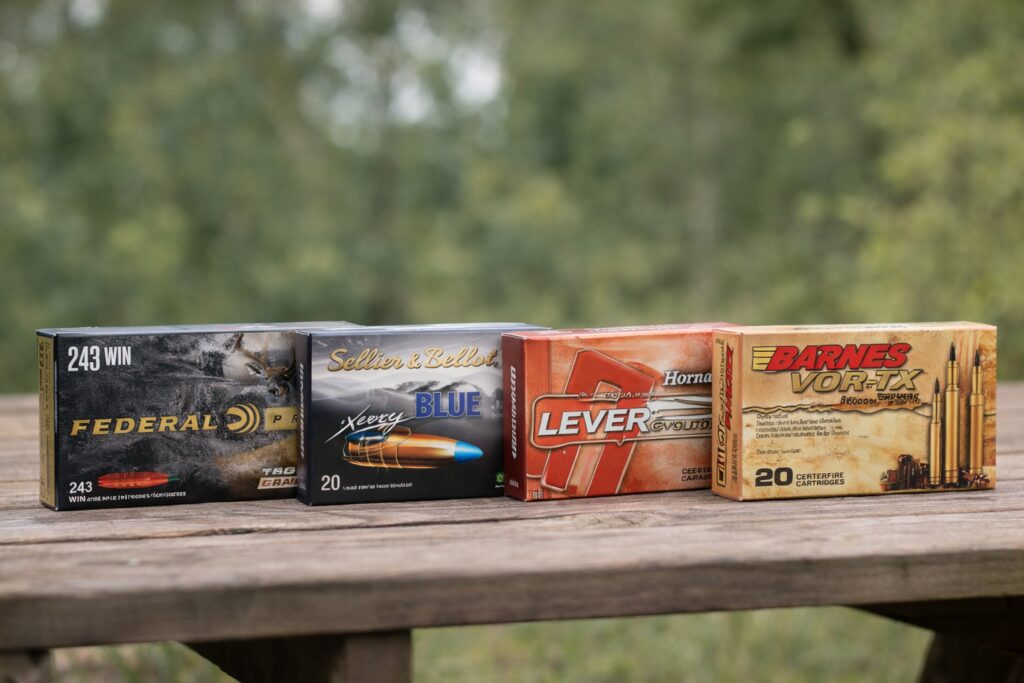
Discover everything you need to know about lead-free ammunition: how copper bullets perform compared to lead, the best brands on the market, state-by-state regulations, and practical tips for making the switch with confidence.
If you’re a hunter or shooter in 2026, chances are you’ve heard about lead-free ammunition. Maybe you’ve seen those distinctive copper-colored bullets at your local gun store, or perhaps you’re in California where lead ammo is banned for hunting. Either way, you’ve probably wondered: is lead-free ammo actually any good?
The short answer? Yes, and it’s getting better every year. Lead-free ammunition has come a long way from its early days of poor accuracy and high prices. Today’s copper bullets offer exceptional performance, near-100% weight retention, and deeper penetration than traditional lead-core ammunition. Whether you’re switching by choice or because of state regulations, understanding lead-free ammo will help you make confident decisions about what goes in your rifle or handgun.
In this comprehensive guide, we’ll cover everything you need to know about lead-free ammunition: what it is, how it performs compared to lead, the best brands on the market, state-by-state regulations, and practical tips for making the switch. By the end, you’ll know exactly which lead-free options work best for your shooting needs.
What Is Lead-Free Ammunition?
Lead-free ammunition is exactly what it sounds like: ammunition that contains no lead in the bullet construction. Instead of traditional lead-core bullets, lead-free ammo uses alternative materials, most commonly solid copper or copper alloys.
The most popular type of lead-free bullet is the monolithic copper bullet. Unlike traditional bullets that have a lead core surrounded by a copper jacket, monolithic bullets are made from a single piece of solid copper. These bullets typically feature a hollow point cavity at the tip that initiates controlled expansion upon impact.
Lead-free ammunition comes in several varieties. Solid copper bullets like Barnes TSX and Federal Trophy Copper are the most common for hunting and self-defense. You’ll also find copper-polymer blends, compressed powdered metal, and frangible bullets designed for training environments. Some manufacturers produce lead-free options in virtually every caliber, from .223 Remington for varmints to .375 H&H for dangerous game.
The ammunition industry began developing lead-free options in the 1980s, initially for military training purposes to reduce lead contamination on ranges. Barnes Bullets pioneered the modern monolithic copper bullet with their X-Bullet design, which has evolved into today’s highly effective TSX and TTSX lines. What started as a niche product has become mainstream, with every major ammunition manufacturer now offering lead-free options.
The push toward lead-free ammo comes from multiple directions. Environmental concerns about lead poisoning in wildlife, particularly scavenging birds like California condors and bald eagles, have driven regulatory changes in several states. Range owners appreciate reduced lead exposure for employees and shooters. And many hunters have switched voluntarily after experiencing the impressive terminal performance of copper bullets.
Lead-Free vs. Lead: How Does Copper Ammo Actually Perform?
This is the question that matters most to shooters: does lead-free ammunition actually work as well as traditional lead-core ammo? The answer depends on what you’re measuring, but modern copper bullets excel in several key areas.
Penetration and Weight Retention
Copper bullets consistently outperform lead-core bullets in penetration and weight retention. A quality copper bullet like the Barnes TTSX will retain 95-100% of its original weight after impact, compared to 50-70% for traditional lead-core bullets that shed their jacket. This near-perfect weight retention means copper bullets drive deeper through tissue and bone, which translates to more reliable performance on game animals.
The deeper penetration of copper bullets is particularly valuable when hunting larger game or when shot angles aren’t perfect. A broadside shot on a whitetail deer might not show much difference between copper and lead, but try a quartering-away shot on an elk, and that extra penetration becomes critical for reaching vital organs.
Key advantage: Copper bullets retain 95-100% of their weight, compared to just 50-70% for traditional lead-core bullets.
Expansion Characteristics
Modern lead-free bullets expand reliably and predictably. Copper is harder than lead, so early copper bullets sometimes failed to expand at lower velocities. Today’s designs have solved this problem with engineered hollow point cavities, polymer tips, and petaling designs that ensure expansion even at moderate impact speeds.
Barnes TSX bullets, for example, typically expand to 1.5-2x their original diameter and create four distinct copper petals that look like a flower when recovered from game. This controlled expansion creates a wider wound channel while maintaining that impressive weight retention. Federal Trophy Copper and Hornady CX bullets perform similarly, with expansion that rivals or exceeds traditional lead-core hunting bullets.
Accuracy Considerations
Here’s where things get interesting. Copper bullets are longer than equivalent-weight lead bullets because copper is less dense than lead. A 150-grain copper bullet will be noticeably longer than a 150-grain lead-core bullet. This extra length means copper bullets need faster rifling twist rates to stabilize properly.
If you’re shooting a modern rifle manufactured in the last 10-15 years, you’ll likely have no issues. But older rifles with slower twist rates, particularly in calibers like .30-06 or .308 Winchester, might struggle to stabilize heavier copper bullets. The solution is often to drop bullet weight. Instead of a 180-grain lead bullet, try a 150-grain copper bullet. The lighter copper bullet will stabilize better and, thanks to superior weight retention, will still penetrate as deeply as the heavier lead bullet.
Many shooters report excellent accuracy with copper bullets once they find the right weight for their rifle’s twist rate. Sub-MOA groups are common with Barnes, Federal, and Hornady’s copper offerings.
Terminal Performance on Game
This is what hunters care about most, and here copper bullets shine. The combination of deep penetration, consistent expansion, and nearly 100% weight retention creates devastating terminal performance. Hunters consistently report that animals shot with copper bullets drop faster and leave better blood trails than those shot with lead.
The lack of bullet fragmentation also means less meat damage, which is a practical benefit many hunters appreciate. A Barnes TSX or Federal Trophy Copper bullet creates a clean, predictable wound channel without the explosive fragmentation that can destroy shoulder meat.
Hunter feedback: Animals drop faster with copper bullets and leave better blood trails for easier tracking.
Cost Comparison
Lead-free ammunition does cost more than traditional lead-core ammo, typically 10-30% more depending on the brand and caliber. A box of Barnes VOR-TX in .308 Winchester might run $40-45 compared to $30-35 for a comparable box of lead-core hunting ammo. For self-defense handgun ammunition, Federal HST (lead) costs about $25-30 per box while lead-free options run $30-40.
The price gap has narrowed significantly over the past decade as production has scaled up and more manufacturers have entered the market. For most hunters who shoot 20-40 rounds per year to sight in and hunt, the extra cost is minimal compared to the overall expense of a hunting trip.
Best Lead-Free Ammo Brands
Not all lead-free ammunition performs equally. Here are the brands that have proven themselves in the field, backed by years of real-world results from hunters and shooters.
Barnes Bullets
The Gold Standard
Barnes is the undisputed king of lead-free ammunition. They pioneered the modern monolithic copper bullet and continue to set the standard with their VOR-TX, TSX, and TTSX lines.
The Barnes TSX (Triple-Shock X) features a solid copper construction with a deep hollow point cavity and engineered bands that reduce barrel fouling. These bullets expand into four distinct petals and retain virtually 100% of their weight.
The Barnes TTSX adds a blue polymer tip to the TSX design, which improves ballistic coefficient and initiates expansion more reliably at longer ranges and lower velocities.
VOR-TX is Barnes’ premium factory-loaded ammunition line featuring TTSX bullets loaded to optimal velocities.
Best for: Hunters who want proven performance with the most extensive track record in the industry.
Federal Premium
Trophy Copper Excellence
Federal Premium’s Trophy Copper line has become a favorite among hunters who want lead-free performance with the Federal name behind it. Trophy Copper bullets feature a polymer tip, deep hollow point cavity, and a unique skiving pattern that creates consistent expansion.
Federal loads Trophy Copper bullets across a wide range of hunting calibers, and the ammunition is known for excellent accuracy and consistent performance. Many hunters report that Trophy Copper shoots more accurately in their rifles than other lead-free options, likely due to Federal’s quality control and careful load development.
Best for: Shooters seeking exceptional accuracy combined with proven terminal performance.
Hornady
CX Innovation
Hornady entered the lead-free market relatively recently but made a splash with their CX (Copper alloy eXpanding) bullets. The CX features Hornady’s signature Heat Shield tip, which resists deformation from barrel heat and improves ballistic coefficient.
Hornady CX bullets use a copper alloy that’s optimized for consistent expansion. The bullets feature a unique monolithic construction with an optimized groove pattern to reduce pressure.
The CX line is available in Hornady’s Outfitter ammunition, which features nickel-plated cases for corrosion resistance and reliable feeding.
Best for: Hunters in wet conditions or those who need ammunition that can sit in a magazine for extended periods.
Winchester
Copper Impact Value
Winchester offers lead-free options in their Copper Impact line, which features solid copper hollow point bullets at accessible price points. Copper Impact ammunition is often 15-20% less expensive than Barnes or Federal options while still delivering good performance.
Best for: Budget-conscious shooters who want reliable lead-free performance at competitive prices.
Norma
Eco Strike Premium
For hunters seeking premium performance, Norma’s Eco Strike line delivers exceptional accuracy and terminal performance. Norma uses a copper-tin alloy bullet that expands reliably even at lower velocities. The bullets feature a polymer tip and boat-tail design for excellent ballistic coefficients.
Best for: Discriminating hunters who want top-tier performance and don’t mind paying for quality.
Sig Sauer
Elite Hunting
Sig Sauer has entered the lead-free market with their Elite Hunting line featuring solid copper bullets. Sig’s offerings are competitively priced and perform well, though they don’t yet have the track record of Barnes or Federal.
Best for: Shooters who trust the Sig Sauer name and want a solid mid-range option.
What to look for: When choosing lead-free ammunition, prioritize proven terminal performance, reliable expansion at your expected impact velocities, availability in your caliber, and accuracy in your specific rifle. Start with Barnes TTSX or Federal Trophy Copper if you’re unsure, as these have the most extensive track records of success.
At Zeth Ammo, we carry Barnes VOR-TX, Federal Trophy Copper, Hornady CX, and Winchester Copper Impact in popular hunting and self-defense calibers. Browse our lead-free ammunition selection to find options for your caliber.
Lead-Free Ammo Laws: State-by-State Regulations
Understanding lead-free ammunition laws is essential, especially if you hunt in multiple states or travel for hunting trips. Regulations vary significantly by state and continue to evolve.
California
California has the nation’s most comprehensive lead-free ammunition law. As of July 1, 2019, all ammunition used for hunting any wildlife in California must be lead-free, with no exceptions. This includes hunting on both public and private land throughout the state.
The California ban was driven by concerns about California condors ingesting lead fragments from gut piles left by hunters. The rule applies to all hunters regardless of species pursued, from dove hunters to big game hunters. Violations can result in fines and loss of hunting privileges.
California maintains a list of certified lead-free ammunition that’s legal for hunting. Most major brands including Barnes, Federal, Hornady, and Winchester are on the approved list. Zeth Ammo ships lead-free ammunition to all California addresses and can help ensure your chosen ammunition is California-compliant.
Arizona
Arizona requires lead-free ammunition when hunting in the California condor range, which includes parts of northern Arizona. Outside the condor range, hunters can use traditional lead ammunition. The condor range is clearly marked on Arizona Game and Fish Department maps.
Nevada, Utah, Oregon & Washington
Nevada recommends but does not require lead-free ammunition when hunting in areas where golden eagles are common. Utah has no state-wide lead-free requirements, though certain wildlife management units have voluntary programs. Oregon and Washington have no state-wide lead-free mandates but strongly encourage voluntary use.
Western States
Colorado, Wyoming, and Montana have no lead-free requirements for big game hunting. However, some specific wildlife areas may have lead-free requirements, particularly those managed for waterfowl.
Midwest and Eastern States
Most Midwestern and Eastern states have no lead-free requirements for rifle and handgun ammunition. However, non-toxic shot requirements for waterfowl hunting have been federal law since 1991, which means steel, bismuth, or tungsten shot for ducks and geese nationwide.
Some states like Illinois and Iowa have lead-free requirements for hunting on certain state-managed properties. Always check current regulations for the specific property you’re hunting.
Future Trends
Several states are studying lead-free ammunition requirements, and the trend is clearly toward more regulation, not less. Wildlife biologists continue to document lead poisoning in eagles, condors, and other scavenging birds, which provides data supporting additional restrictions.
If you’re a hunter, familiarizing yourself with lead-free options now makes sense even if your state doesn’t currently require them. Having ammunition that works in any state provides flexibility for hunting trips and future-proofs your ammunition choices.
How to Switch to Lead-Free Ammo: Practical Tips
Switching to lead-free ammunition doesn’t have to be complicated, but there are some important considerations that will help ensure success. Here’s what you need to know.
Common Mistakes to Avoid
Switching to lead-free ammunition is straightforward for most shooters. Modern copper bullets are highly effective, and most hunters report being very satisfied with performance once they find the right load for their rifle. Take the time to test different options, re-zero properly, and build confidence in your new ammunition before heading afield.
Looking for lead-free options for your caliber? Zeth Ammo carries Barnes, Federal, Hornady, and Winchester lead-free ammunition in popular hunting calibers with fast shipping to all 50 states, including California. Browse our lead-free ammunition or check out our other ammunition guides for more information.
Frequently Asked Questions
Is lead-free ammo more expensive than regular ammo?
Yes, lead-free ammunition typically costs 10-30% more than traditional lead-core ammunition. A box of Barnes VOR-TX might run $40-45 compared to $30-35 for comparable lead hunting ammo. However, the price gap has narrowed significantly in recent years as production has increased and more manufacturers have entered the market. For hunters who only shoot 20-40 rounds per season, the extra cost is minimal compared to the overall expense of hunting.
Does lead-free ammo perform as well as lead ammo for hunting?
Modern lead-free ammunition actually outperforms lead ammunition in several key areas. Copper bullets retain 95-100% of their weight after impact compared to 50-70% for lead-core bullets, which means deeper penetration and more reliable performance on game. Hunters consistently report that animals drop faster with copper bullets and leave better blood trails. The main difference is that you may need to adjust bullet weight for your rifle’s twist rate, typically going one weight class lighter than your current lead bullets.
Can I use lead-free ammo in any rifle?
Most modern rifles work perfectly with lead-free ammunition, but older rifles with slow twist rates may struggle to stabilize longer copper bullets. The solution is simple: drop one bullet weight class. For example, if your .308 Winchester has a slow twist rate, use 150-grain copper bullets instead of 180-grain. The lighter copper bullet will stabilize better and still penetrate as deeply as heavier lead bullets thanks to superior weight retention. Rifles manufactured in the last 10-15 years typically have fast enough twist rates for copper bullets.
Is lead-free ammo required for hunting in California?
Yes, California requires all ammunition used for hunting any wildlife to be lead-free, with no exceptions. This law has been in effect since July 2019 and applies to both public and private land throughout the state. The regulation was implemented to protect California condors and other scavenging birds from lead poisoning. Zeth Ammo ships certified lead-free ammunition to all California addresses to help hunters comply with state regulations.
Do I need to re-zero my rifle when switching to lead-free ammo?
Yes, you should always re-zero your rifle when switching to lead-free ammunition. Copper bullets have different ballistic characteristics than lead bullets and will impact at a different point. Most copper bullets produce slightly higher velocities and may shoot 1-2 inches higher at 100 yards than your current ammunition. Plan to spend time at the range confirming zero and shooting groups to verify accuracy before hunting season.
What’s the best lead-free ammo brand for deer hunting?
Barnes VOR-TX, Federal Trophy Copper, and Hornady CX are the three most proven lead-free options for deer hunting. Barnes has the longest track record with their TTSX bullets and is considered the gold standard. Federal Trophy Copper offers excellent accuracy and consistent expansion. Hornady CX is the newer option with great ballistic coefficients. All three perform exceptionally well on deer-sized game. The best choice for you depends on what shoots most accurately in your specific rifle, so try 2-3 options if possible.
Will copper bullets damage my rifle barrel?
No, copper bullets will not damage your rifle barrel when used properly. In fact, many shooters find that copper bullets with driving bands actually foul less than traditional lead-core bullets. Some copper bullets may leave slightly more copper fouling than jacketed lead bullets, but this is easily removed with standard copper solvent during cleaning. Modern copper bullets from reputable manufacturers like Barnes, Federal, and Hornady are completely safe for all rifle barrels.
Can I buy lead-free ammo online and have it shipped to my state?
Most states allow online ammunition purchases and shipping with no special requirements. California, Massachusetts, Illinois, Connecticut, and Washington have specific regulations but still allow online ammo sales with ID verification or background checks. Zeth Ammo ships lead-free ammunition to all 50 states and handles compliance with state-specific regulations. We specialize in shipping to restricted states and make the process as simple as ordering any other product online.
Conclusion
Lead-free ammunition has evolved from a niche product into a mainstream choice that often outperforms traditional lead-core bullets. Whether you’re switching because of state regulations or choosing copper bullets for their superior terminal performance, today’s lead-free options deliver accuracy, reliability, and devastating effectiveness on game.
The key to success is understanding a few simple principles: copper bullets need adequate twist rates to stabilize, you may need to drop one bullet weight class compared to lead, and you should always re-zero when switching ammunition. Modern copper bullets from Barnes, Federal, and Hornady have proven themselves in the field with hundreds of thousands of successful hunts.
As more states consider lead-free requirements and hunters experience the benefits of copper bullets firsthand, lead-free ammunition will only become more popular. Getting ahead of the curve now means you’ll be prepared regardless of regulatory changes and you’ll benefit from the excellent terminal performance these bullets provide.
Ready to Make the Switch to Lead-Free?
Browse Zeth Ammo’s selection of lead-free ammunition including Barnes VOR-TX, Federal Trophy Copper, Hornady CX, and Winchester Copper Impact. We ship to all 50 states with fast delivery and expert customer service.