
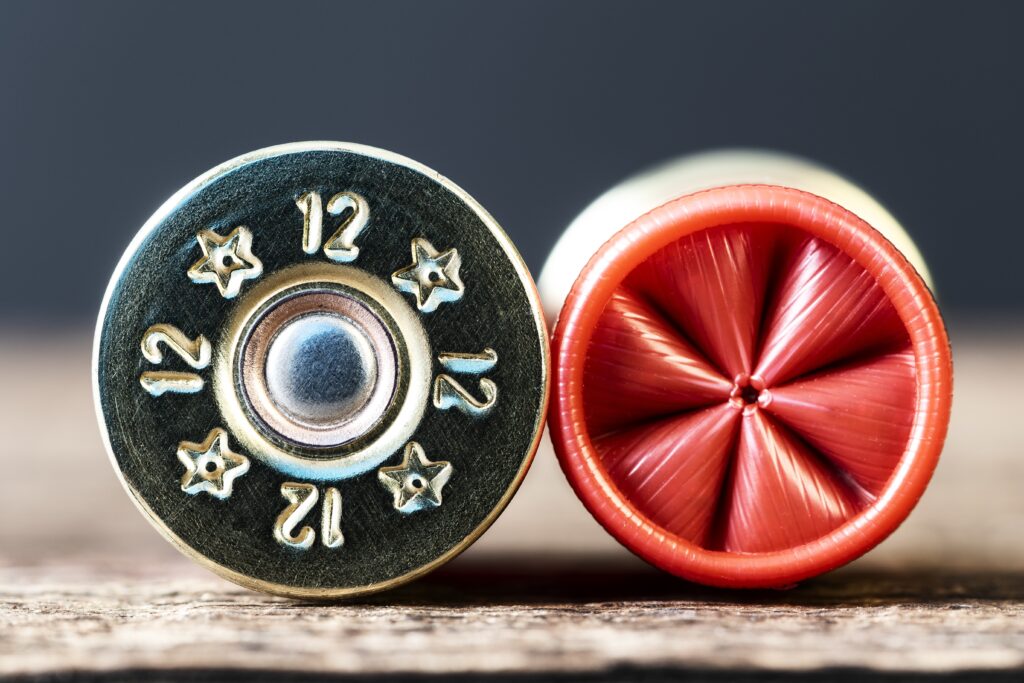
If you’ve ever been confused about shotgun gauges, you’re not alone. Discover why a 12 gauge is bigger than a 20 gauge (despite the backwards numbering), which gauge fits your hunting or defense needs, and how to choose the perfect shotgun for your shooting style.
Ammo Guide Series — Explore All 5 Guides:
Shotgun Gauges — You are here
Rifle Calibers — Coming Soon
If you’ve ever been confused about shotgun gauges, you’re not alone. Here’s something that trips up even experienced shooters: a 12 gauge shotgun has a bigger bore diameter than a 20 gauge. Wait, what? Shouldn’t a higher number mean a bigger gun?
This counterintuitive numbering system confuses people every day, but once you understand the logic behind it, shotgun gauges start to make perfect sense. The gauge number actually tells you how many lead balls of that bore diameter would weigh one pound. So 12 balls equal a pound in 12 gauge, while 20 smaller balls equal a pound in 20 gauge.
In this complete guide, we’ll break down everything you need to know about the five main shotgun gauges: 12, 20, .410, 16, and 28 gauge. You’ll learn which gauge is best for home defense, hunting, sporting clays, and more. By the end, you’ll know exactly which gauge fits your shooting needs—and why that number goes down as the bore gets bigger.
Ready to demystify shotgun gauges once and for all? Let’s dive in.
Understanding Shotgun Gauges: The Basics
The shotgun gauge system dates back centuries and, admittedly, it’s backwards from what your intuition might expect. Here’s how it works: the gauge number represents how many lead balls of that particular bore diameter would equal one pound.
For a 12 gauge, you’d need 12 lead balls to make a pound. For a 20 gauge, you’d need 20 smaller lead balls. The math is simple: more balls needed = smaller diameter. That’s why 12 gauge is bigger than 20 gauge.
This system applies to all standard gauges except one notable exception: the .410 bore. We’ll get to why that one breaks the pattern in a moment.
The five main shotgun gauges you’ll encounter are:
Each gauge has specific strengths, ideal use cases, and ammunition availability considerations. Let’s explore them one by one.
12 Gauge: The Industry Standard
When someone says “shotgun,” they’re probably picturing a 12 gauge. And for good reason—it’s far and away the most popular shotgun gauge in the world.
Why 12 Gauge Dominates
The 12 gauge earned its position as the industry standard through sheer versatility. You can find 12 gauge ammunition for virtually any application: home defense buckshot, deer hunting slugs, waterfowl steel shot, upland game loads, and target shooting shells. Walk into any gun store and the 12 gauge section dwarfs everything else.
This ammunition variety matters more than you might think. Need turkey loads? You’ll find dozens of 12 gauge options. Looking for low-recoil target loads for practice? There are countless choices. Want premium waterfowl loads with specific shot sizes? 12 gauge has you covered.
At Zeth Ammo, we carry extensive 12 gauge ammunition selection including:
Best Uses for 12 Gauge
Home Defense: The 12 gauge with buckshot is the gold standard for home defense. Nine pellets of 00 buck deliver devastating stopping power at close range.
Hunting: From dove to deer to waterfowl, 12 gauge handles it all. The payload capacity and shot options make it effective on game ranging from squirrels to elk.
Sporting Clays and Target Shooting: Competitive shooters favor 12 gauge for its pattern consistency and recoil management options with lighter loads.
Tactical and Law Enforcement: Police and military units worldwide rely on 12 gauge shotguns for their proven effectiveness.
Recoil Considerations
Let’s be honest: 12 gauge kicks. A full-power 12 gauge load produces noticeable recoil, especially in lighter guns. Most adult shooters adapt to it quickly, but smaller-framed individuals, youth shooters, and those sensitive to recoil might find it uncomfortable for extended shooting sessions.
The good news? Recoil-reducing loads, gas-operated semi-autos, and proper shooting technique all help tame the 12 gauge. And if recoil remains an issue, that’s where 20 gauge shines.
20 Gauge: The Goldilocks Option
If 12 gauge is too much gun and .410 is too little, 20 gauge is just right. That’s why many call it the “Goldilocks gauge”—it offers the perfect balance of power and comfort for a wide range of shooters.
Why 20 Gauge Wins Hearts
The 20 gauge produces roughly 30-40% less recoil than 12 gauge while still delivering plenty of power for most hunting situations. This isn’t a “beginner’s gun” despite what some outdated thinking suggests. It’s a smart choice for anyone who values accuracy and follow-up shot speed over raw power.
Women shooters, youth hunters, and smaller-framed adults often prefer 20 gauge because they can shoot it comfortably all day without fatigue. But plenty of experienced hunters choose 20 gauge deliberately—less recoil means better shot placement, and shot placement kills game, not felt recoil.
At Zeth Ammo, our 20 gauge ammunition selection includes excellent options:
Ideal Applications for 20 Gauge
Upland Bird Hunting: Quail, dove, pheasant, and grouse fall cleanly to 20 gauge. The lighter gun makes hiking easier, and the softer recoil helps you swing smoothly on fast-crossing birds.
Youth Hunters: Getting kids started with 20 gauge sets them up for success. They can focus on fundamentals instead of managing heavy recoil.
All-Day Shooting: Whether you’re hunting or shooting sporting clays, 20 gauge won’t beat you up over dozens or hundreds of rounds.
Recoil-Sensitive Shooters: Anyone with shoulder injuries, arthritis, or recoil sensitivity can shoot 20 gauge comfortably.
20 Gauge Performance Reality Check
Don’t let anyone tell you 20 gauge is underpowered. Modern 20 gauge loads perform impressively. A 20 gauge slug will absolutely drop a deer, and modern turkey loads pattern tight enough for clean kills at 40+ yards.
The ammunition selection has improved dramatically in recent years, with premium defensive loads, lead-free options, and specialty hunting ammunition now readily available.
.410 Bore: The Specialist’s Choice
Here’s where the gauge naming system breaks down. The .410 isn’t actually a gauge—it’s a bore measurement. Instead of using the weight-of-lead-balls system, .410 simply measures the bore diameter: .410 inches.
Why .410 Gets Misunderstood
Many people buy .410 shotguns thinking they’re perfect for beginners because of the light recoil. That’s backwards. The .410 is actually the hardest gauge to shoot well because it requires precise aim and offers minimal margin for error.
Think about it: fewer pellets in the shot pattern means you need to hit exactly where you’re aiming. Miss by a few inches and you’ve lost birds you would have cleanly harvested with 20 or 12 gauge. That makes .410 an expert’s gun, not a beginner’s.
Best Uses for .410 Bore
Snake Guns: Farmers, ranchers, and outdoors people love .410 for dispatching venomous snakes at close range.
Close-Range Small Game: Squirrels and rabbits at ranges under 25 yards work with .410, assuming good shot placement.
Judge/Governor Revolvers: The Taurus Judge and S&W Governor revolvers chamber .410 shells, making them popular for close-range self-defense (though effectiveness is debated).
Advanced Shooters Seeking Challenge: Some experienced hunters deliberately choose .410 to challenge themselves and hone their skills.
At Zeth Ammo, we carry .410 bore ammunition including Federal Speed-Shok .410 Bore steel shot (563 in stock) for those specialized applications.
What .410 Isn’t Good For
Let’s be clear about limitations:
If you’re considering .410 as your first shotgun or primary home defense gun, reconsider. It’s a specialist’s tool that shines in specific scenarios but struggles in general-purpose roles.
16 Gauge: The Classic Making a Comeback
The 16 gauge has a fascinating history. Once incredibly popular in the early-to-mid 1900s, it nearly died out when ammunition manufacturers standardized around 12 and 20 gauge. But something interesting has happened in recent years—upland hunters are rediscovering why their grandfathers loved this “forgotten” gauge.
The 16 Gauge Sweet Spot
Picture this: you want more punch than 20 gauge but less recoil than 12 gauge. That’s 16 gauge territory. It sits right in the middle, offering what many upland hunters consider the ideal balance for all-day bird hunting.
A typical 16 gauge load carries 1 to 1-1/8 ounces of shot with recoil falling between 12 and 20 gauge. For hunters who walk miles pursuing pheasants, grouse, or quail, that combination of power and comfort makes sense.
Why the Renaissance?
Several factors drive 16 gauge’s comeback:
Vintage Shotgun Appreciation: Many beautiful older American shotguns were built in 16 gauge. Collectors and hunters are bringing them back into the field.
Upland Hunting Growth: As upland bird hunting grows in popularity, hunters appreciate the specialized tools that excel in those conditions.
Ammunition Availability Improvement: Major manufacturers like Federal and Winchester have expanded their 16 gauge offerings in recent years.
At Zeth Ammo, our 16 gauge options include:
Is 16 Gauge Right for You?
Consider 16 gauge if you:
The main trade-off remains ammunition selection. You won’t find 50 different 16 gauge options on any shelf. But if you’re an upland hunter who values the “just right” performance, the limited selection won’t bother you.
28 Gauge: The Gentleman’s Gauge
Walk into an upland hunting camp and mention you shoot 28 gauge, and you’ll get knowing nods from the experienced hunters. This tiny gauge has earned the nickname “gentleman’s gauge” for its refined shooting characteristics and surprising effectiveness.
Why 28 Gauge Punches Above Its Weight
Don’t judge 28 gauge by its size. Despite having less shot payload than larger gauges, the 28 gauge produces remarkably tight patterns with minimal recoil. The secret lies in the shot column: with less shot deformation in the narrower bore, patterns stay dense and uniform.
Experienced upland hunters often find they lose fewer birds with 28 gauge than larger gauges because the softer recoil allows faster, more accurate second shots. When you’re not flinching from anticipated recoil, you shoot better. It’s that simple.
Best Applications for 28 Gauge
Upland Bird Hunting: Quail, dove, and woodcock are the 28 gauge wheelhouse. The light gun swings fast on crossing shots, and the soft recoil keeps you on target.
Sporting Clays: Competitive shooters appreciate the 28 gauge challenge. Success requires reading the bird perfectly and breaking it with precision.
Experienced Hunters Seeking Refinement: Many hunters “graduate” to 28 gauge after years with larger gauges, valuing shot quality over shot quantity.
At Zeth Ammo, we carry excellent 28 gauge ammunition selections:
The 28 Gauge Trade-offs
Cost: Expect to pay slightly more per round than 12 or 20 gauge. The smaller production volumes mean higher per-unit costs.
Ammunition Availability: You won’t find 28 gauge at every gas station or discount store. Plan ahead and stock up.
Limited Defensive Use: This isn’t a home defense gauge. Stick to hunting and sporting applications.
Requires Skill: The smaller payload demands better marksmanship. Miss your shot and you won’t have 300 pellets to compensate like 12 gauge might.
For hunters who’ve mastered the fundamentals and want to elevate their game, 28 gauge offers a refined shooting experience that rewards precision.
Shotgun Gauge Comparison: Which Should You Choose?
Now that you understand each gauge individually, let’s compare them side-by-side to help you make the right choice.
Quick Comparison Table
| Gauge | Bore Diameter | Best Uses | Recoil Level | Ammo Availability |
|---|---|---|---|---|
| 12 Gauge | .729″ | Everything—defense, hunting, sport | Moderate-Heavy | Excellent |
| 20 Gauge | .615″ | Upland hunting, all-purpose, youth | Light-Moderate | Excellent |
| .410 Bore | .410″ | Snakes, specialized small game | Very Light | Limited |
| 16 Gauge | .662″ | Upland hunting, vintage guns | Light-Moderate | Moderate |
| 28 Gauge | .550″ | Upland birds, sporting clays | Very Light | Moderate |
Decision Framework
Start with your intended use:
For home defense: Choose 12 gauge or 20 gauge with buckshot. Both provide effective stopping power, with 12 gauge offering more pellets and 20 gauge offering less recoil.
For general hunting: Choose 12 gauge for maximum versatility or 20 gauge for lighter carry weight and recoil.
For upland bird hunting: Consider 20, 16, or 28 gauge depending on your recoil tolerance and desire for challenge.
For waterfowl hunting: Choose 12 gauge for its superior pattern density at longer ranges.
For sporting clays competition: Choose 12 or 20 gauge for ammunition variety and availability.
For specialized uses (snakes, limited small game): Consider .410 bore.
Then consider the shooter:
Factor in ammunition availability and cost:
First-time shotgun buyers should strongly consider 12 or 20 gauge. The ammunition variety, competitive pricing, and easy availability make these gauges practical choices. You can walk into virtually any sporting goods store and find dozens of options.
Specialized gauges (.410, 16, 28) work best as second or third shotguns for shooters who understand their specific use cases and are willing to plan ammunition purchases ahead.
The Zeth Ammo Advantage
No matter which gauge you choose, Zeth Ammo ships to all states including California, Connecticut, Massachusetts, Washington, and Illinois where many online retailers won’t ship. Browse our complete shotgun ammunition selection with transparent pricing and fast shipping.
Frequently Asked Questions
Why does a smaller gauge number mean a bigger gun?
The gauge system is based on how many lead balls of that bore diameter equal one pound. Twelve lead balls equal a pound in 12 gauge, while 20 smaller balls equal a pound in 20 gauge. More balls needed means smaller diameter, so the numbers work backwards from what you’d expect. The .410 bore breaks this pattern—it’s named after its actual bore diameter (.410 inches) rather than using the gauge system.
Can you shoot different gauges in the same shotgun?
Absolutely not. Never attempt to fire ammunition of a different gauge in your shotgun. Using the wrong gauge can destroy your gun and cause serious injury. A 20 gauge shell can slip down a 12 gauge barrel and lodge partway down—when you fire a 12 gauge shell behind it, the gun can explode. Always verify you’re loading the correct gauge ammunition for your specific shotgun.
What’s the best shotgun gauge for home defense?
For home defense, 12 gauge and 20 gauge with buckshot are the proven choices. Twelve gauge delivers devastating stopping power with nine pellets of 00 buckshot, while 20 gauge offers effective stopping power with more manageable recoil for faster follow-up shots. Both are excellent—choose based on your recoil tolerance and ability to handle the gun under stress. At Zeth Ammo, we carry premium defensive loads in both gauges.
Is 16 gauge really making a comeback?
Yes, especially among upland bird hunters. After decades of decline, 16 gauge is experiencing a renaissance as hunters rediscover its “just right” balance between 12 and 20 gauge. Modern ammunition manufacturers have expanded their 16 gauge offerings in response to growing demand. While it’ll never match 12 or 20 gauge in popularity, 16 gauge has found its niche with dedicated upland hunters and vintage shotgun enthusiasts.
Why is .410 called a bore instead of a gauge?
The .410 breaks the gauge naming convention because it measures actual bore diameter (.410 inches) rather than using the weight-of-lead-balls system. If .410 followed the gauge system, it would be called something like 67 or 68 gauge (the exact number depends on lead ball diameter calculations). The direct measurement naming stuck, probably because it’s simpler than “67 gauge” and clearly differentiates it from standard gauge shotguns.
Where can I buy shotgun ammunition online that ships to my state?
Zeth Ammo ships shotgun ammunition to all states including California, Connecticut, Massachusetts, Washington, and Illinois. Many online retailers won’t ship to these restricted states, but we handle compliance with state regulations so you can order with confidence. Browse our complete ammunition selection with transparent availability, competitive pricing, and fast shipping. Plus, you’ll pay no sales tax outside Connecticut.
What shotgun gauge should beginners buy?
First-time shotgun buyers should choose 12 gauge or 20 gauge. These gauges offer the widest ammunition selection, most affordable practice ammunition, and greatest versatility for learning different shooting applications. If you’re recoil-sensitive or smaller-framed, start with 20 gauge. If you want maximum versatility and can handle moderate recoil, choose 12 gauge. Avoid .410 bore as a first shotgun—despite light recoil, it requires too much precision for someone learning fundamentals.
Does shotgun gauge affect accuracy?
Shotgun gauge doesn’t directly determine accuracy, but it does affect pattern density and effective range. Larger gauges like 12 gauge throw more pellets, creating denser patterns that are more forgiving of slight aiming errors. Smaller gauges like 28 gauge or .410 bore require more precise aim because fewer pellets mean less pattern density. However, with proper technique and choke selection, any gauge can be accurate within its effective range. The shooter’s skill matters far more than the gauge.
Conclusion: Finding Your Perfect Shotgun Gauge
Each shotgun gauge serves a purpose, from the versatile 12 gauge dominating the industry to the refined 28 gauge beloved by upland purists. The “best” gauge doesn’t exist—only the best gauge for your specific needs.
Choose 12 gauge for maximum versatility and ammunition selection. Pick 20 gauge for excellent balance of power and manageable recoil. Consider .410 bore only for specialized uses like snake guns or as a challenge for advanced shooters. Explore 16 gauge if you’re an upland hunter seeking the middle ground. Embrace 28 gauge when you want the ultimate refinement in bird hunting.
Remember: gauge selection should be based on your intended use first, then your personal comfort level and ammunition availability. A shotgun you shoot well with a “smaller” gauge beats a shotgun you can’t handle in a “bigger” gauge.
Ready to Stock Up on Shotgun Ammunition?
Browse Zeth Ammo’s complete shotgun selection with fast shipping to all states and no sales tax outside Connecticut. For environmentally-conscious hunters, check out our lead-free ammunition options featuring copper loads from Barnes, Federal, and Winchester.
As a woman-owned small business, we’re committed to providing exceptional service, educational content, and the ammunition you need—regardless of which state you call home. Happy shooting, and remember: the right gauge is the one you’ll practice with consistently.
#ShotgunGauges #12Gauge #20Gauge #410Bore #16Gauge #28Gauge #ShotgunAmmo #HuntingAmmo #HomeDefense #SportingClays #UplandHunting #ZethAmmo